
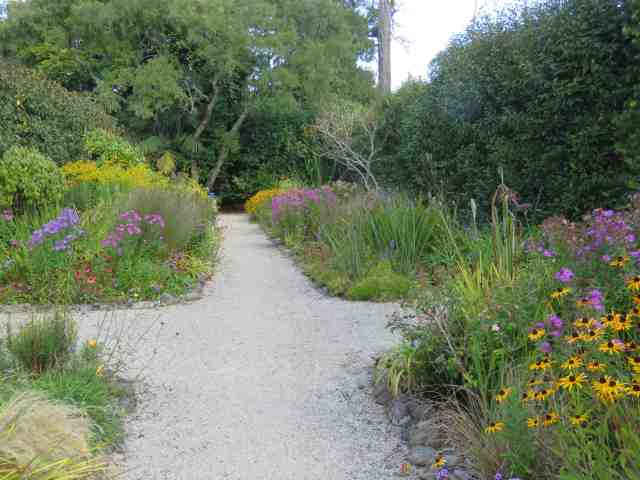
Zach and I are busy, a-diggin’ and a-dividin’. The advice is often to do this in springtime when the plants are in growth and that is probably true for gardeners with heavy soils and colder winters. We prefer to do it in autumn, even if it means getting hoses and buckets out in dry spells. Our winters are short and we will have at least six weeks and maybe longer before growth stops for winter. Autumnal conditions can extend as far as the winter solstice.
In contrast to our long, mild autumn, springtime is usually wet and we are slower than some areas for soils to warm up. It is fine to dig and divide at that time but, by doing it now, plants have a jump start. Besides, we have a lot to do. Many summer flowering perennials are demanding plants when it comes to care.
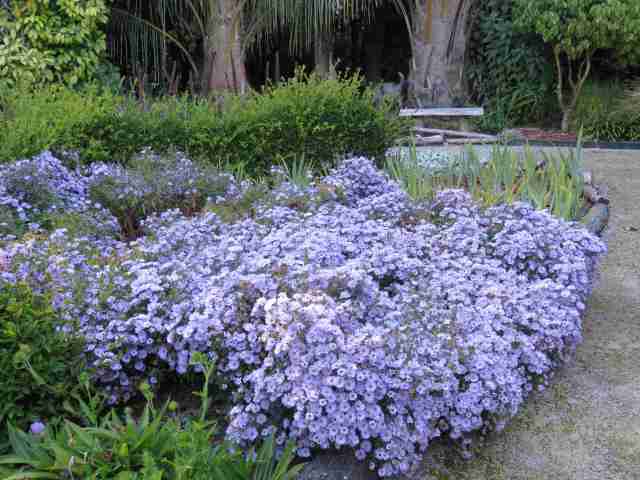
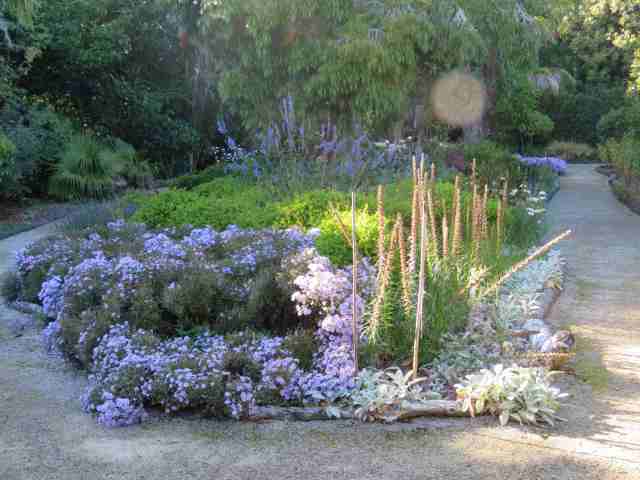
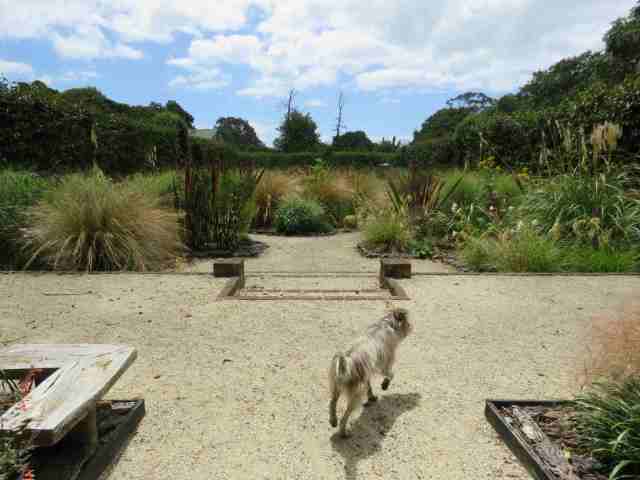
Zach started on the asters in the Wave Garden. While a variety of mid-sized asters carry the twin borders through autumn, we had just used a compact blue aster in two of the bays of the Wave Garden. In its first couple of years, I loved it and so did the butterflies. It is a clump-forming Michaelmas daisy. I fell out of love with it when it started to get the white haze of mildew in summer but even more so when we realised it needed to be lifted and divided pretty much every single year to keep it as a carpet of blue. By the second year it falls apart. Nice it may be, but it is not nice enough to warrant that amount of individual attention.
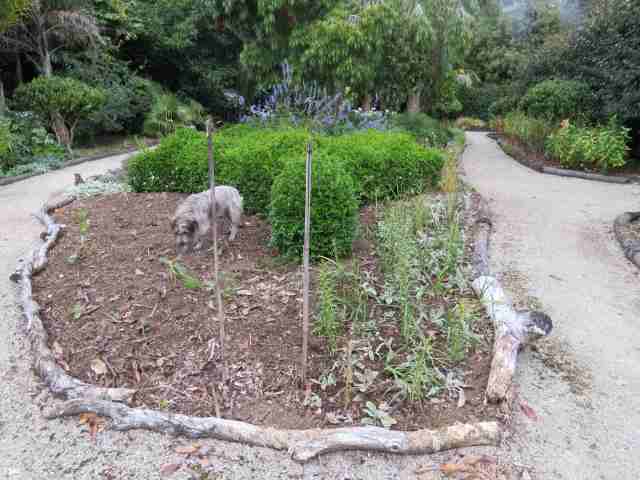
This blue aster has a name but I have to look it up every time because who can remember Aster novi-belgii ‘Professor Anton Kippenberg’? Even worse was when I discovered that the plant has now been reclassified and is no long an aster but… wait for it… is now Symphyotrichum novi-belgii ‘Professor Anton Kippenberg’. Too much, I say, too much. It has gorn forever from the Wave Garden, replaced by a compact blue salvia we had elsewhere and blue bearded iris.
Gardening for us is in part constantly refining areas, acting on what has worked and what is less satisfactory. And we have done a lot of learning since I planted the summer gardens, because large plantings of summer perennials are new territories for us. We fully lifted, dug, and replanted 4 of the 12 outside bays in the Wave Garden, replanting with fresh compost and mulch.
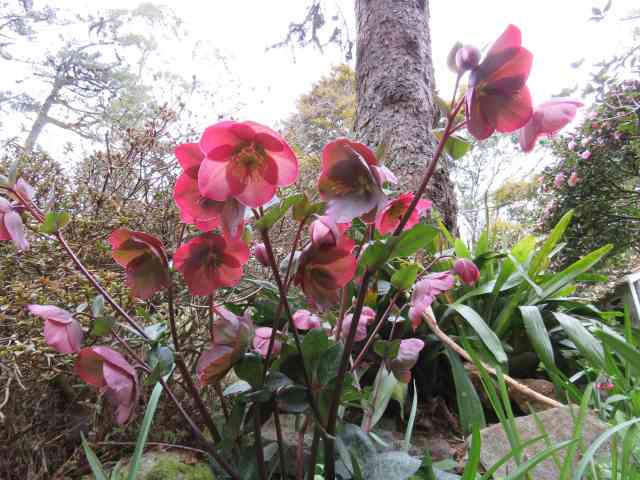
Zach moved on to the Court Garden and I moved into other plantings. In one border, I lifted all the hellebores and consigned them to the compost heap. We have fairly large plantings of hellebores and I wouldn’t be without H. argutifolius, H. x sternii and H. foetidus in particular, but I wouldn’t give you anything for most of the more common H. orientalis in our conditions. We have tried really hard with them, Mark has done controlled crosses and we have admired their merits in places with cold winters but I truly think they are over-rated in milder climates. Out they go. The only ones that I will give prime garden space to are the marvellous ‘Frostkiss’ series bred by Rodney Davey. ‘Anna’s Red’ and ‘Penny’s Pink’ were the first ones to be released here but there are more later ones and I aim to buy the lot now because they are so good. Lovely foliage, plenty of flowers held above the foliage and they all seem to be sterile so not producing endless seed to be weeded out. I dug my plants – I see I have 7 different varieties already – divided them and consolidated them into one border where they have prime position with spring bulbs. I expect them to take a year or two to re-establish well but my hopes are high.
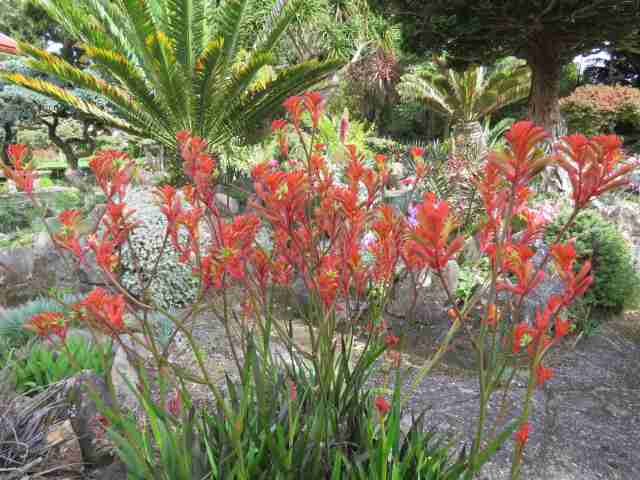
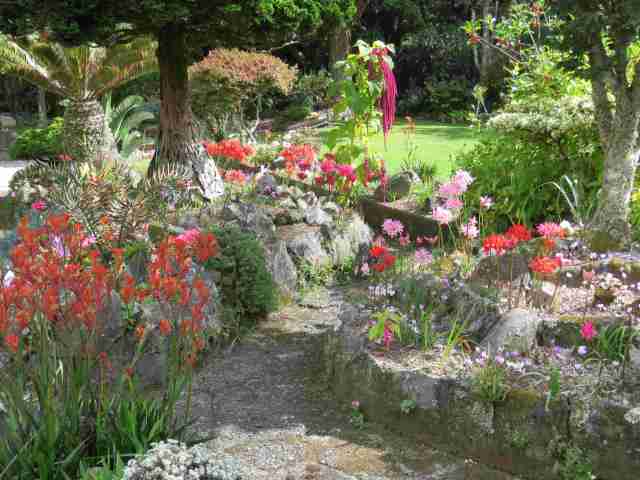
Some plants take a while to re-establish. I had all but given up on this anigozanthus (kangaroo paw) after dividing it and replanting it in full sun two or maybe three years ago. I have lost plants from this family before. But it took a year to rest, do very little and review its options before stunning this year with the best show it has ever put on.
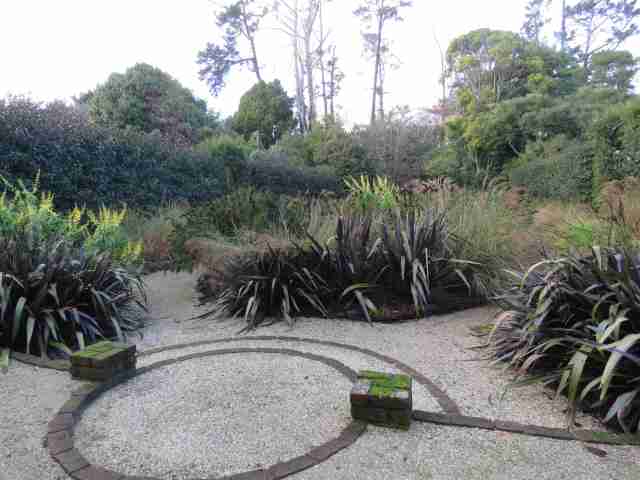
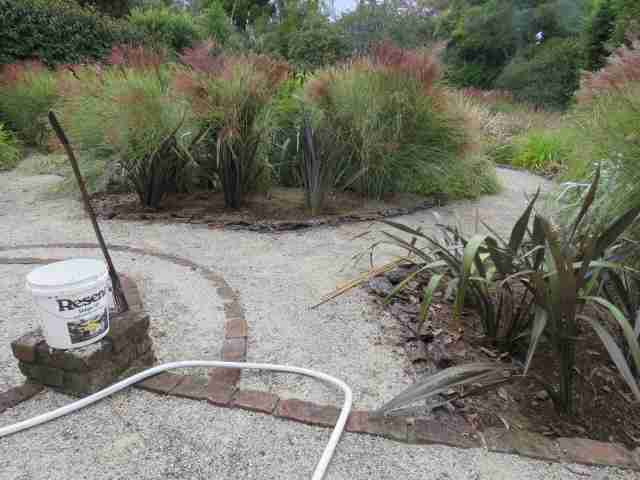
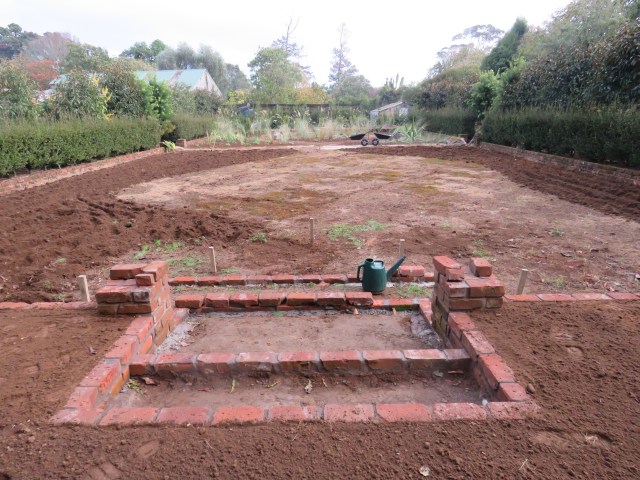
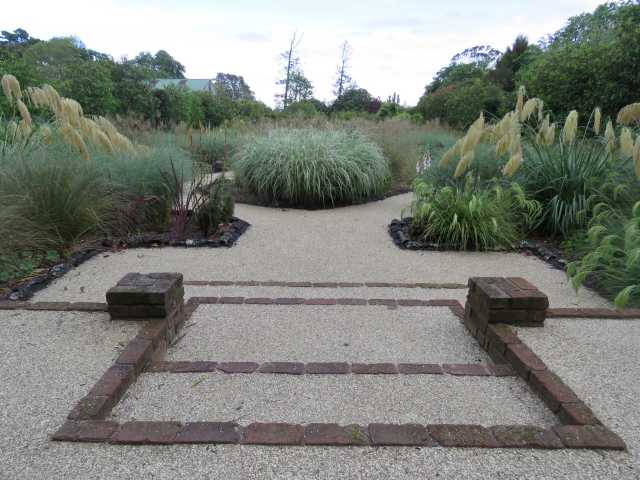
Zach is doing a major lift and divide in the Court Garden and I am grateful he is doing it because most of the plants are large. I planted this garden in 2019, starting with a blank canvas and reasonably large divisions (not small nursery plants in pots). In the time since, it has had very little attention bar a major cull and replant on the Miscanthus ‘Morning Light’ in 2022. Zach isn’t lifting everything but he is lifting quite a bit and we are reviewing the plantings metre by metre. It seems that about six years is how long that sort of planting of strong growing, large perennials can last looking good. An intensive three weeks of work every six years along with a bit of ongoing care and weeding is not exactly a high maintenance demand.
Long may this autumn last. We still have plenty to get done.





 Tikorangi The Jury Garden